“Responsible gambling” appears in the footer of virtually every gambling site in the world, which is a good reason to be sceptical of it. A phrase that universal has usually stopped meaning much.
It is worth pinning down, because underneath the marketing there is something real.
Where the phrase came from, and the criticism of it
The term grew up alongside the regulated gambling industry, and it puts the emphasis on the individual: gamble responsibly, know your limits, play within your means.
That framing has drawn sustained criticism from public-health researchers, who point out that it places the entire burden on the player and none on the product. A game engineered to be maximally compelling is not neutral, and telling someone to be responsible around it is a bit like telling them to be responsible around a machine designed by people who studied exactly how to keep them there.
The alternative language now common in research and regulation is gambling harm reduction, which treats harm as something a product can cause and an operator can be obliged to reduce. That shift matters, because it changes who is expected to act.
What it means in practice
For an operator, the meaningful version is not a footer link. It is:
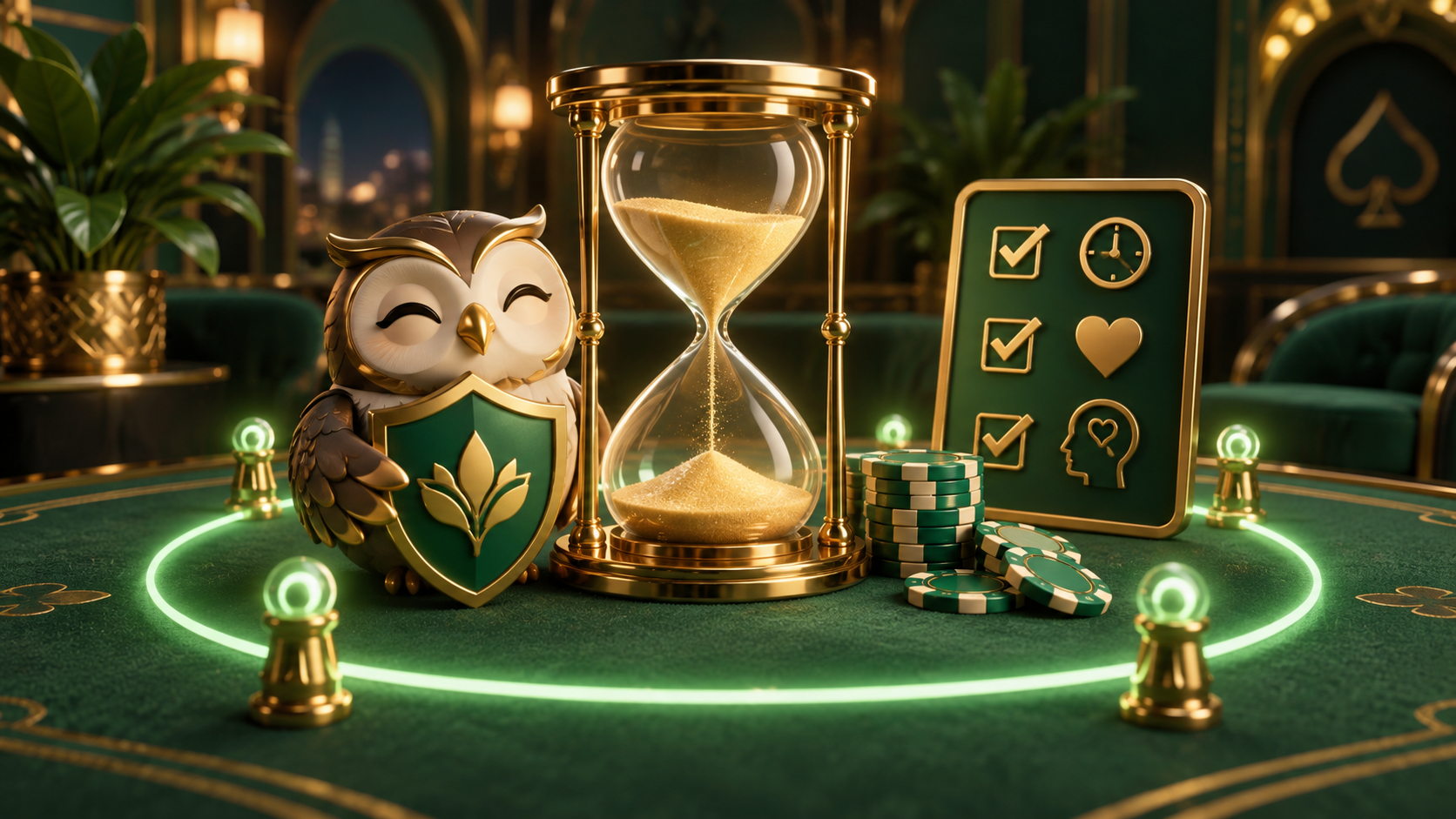
- Deposit and loss limits the player sets in advance and the operator enforces — including a delay before any increase takes effect.
- Reality checks — periodic interruptions showing time played and net position.
- Self-exclusion that actually works, including across operators.
- Affordability and behaviour monitoring, with intervention when patterns look like harm rather than enthusiasm.
- Honest presentation of odds, and no design that dresses a loss up as a win.
For a player, the practical version is narrower but more useful: decide the amount before you start, treat it as the price of the entertainment rather than an investment, set a time limit as well as a money limit, and never fund play with money that has another job.
The warning signs worth knowing
Harm is rarely a single dramatic event. It tends to look like:
- Playing longer or for more than intended, repeatedly.
- Returning to win back losses — the single most reliable warning sign there is.
- Gambling to change how you feel rather than for entertainment.
- Hiding it, or being defensive when it comes up.
- Borrowing, or using money set aside for something else.
- Thinking about it when not doing it.
None of these is about the amount. Harm is defined by the effect on a person’s life, not by the size of the stake.
Free-to-play sits in an odd position
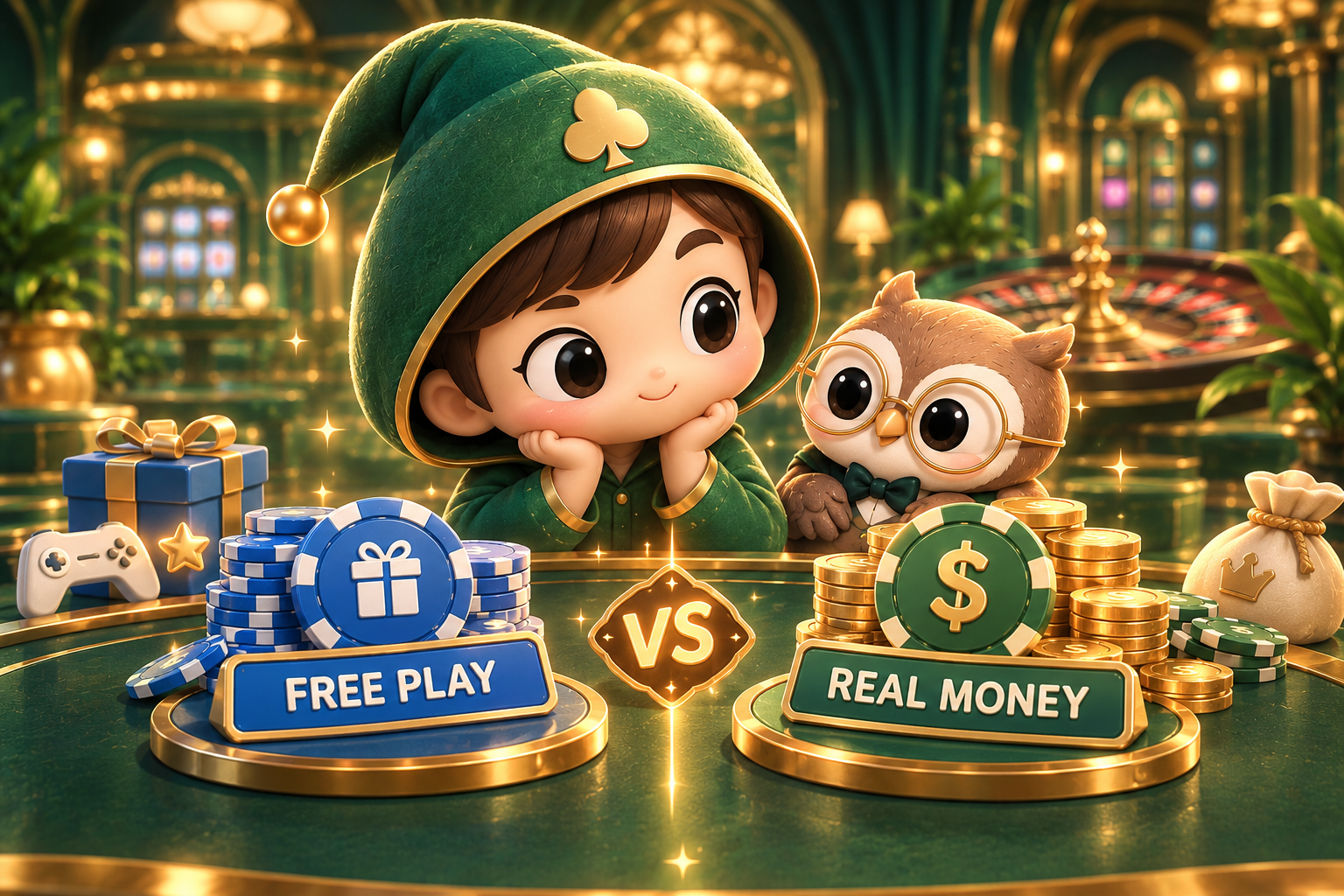
We should be straight about our own category. FUNFOR.YOU uses play chips only — there is no cash-out and nothing to win. That removes the financial harm entirely, which is the largest part of it.
What it does not remove is time, and researchers have raised a legitimate concern about social casino games: that they can normalise the mechanics of gambling, and that free play tends to run at a rate no real casino would offer, which can set an expectation that does not survive contact with a real one.
We would rather say that plainly than pretend it is not a question. If you play here and then go on to play somewhere with real money, please carry the numbers from our guides with you and not the win rate.
Where to get help
If any of the signs above sound familiar, these are free, confidential and independent:
- United Kingdom — National Gambling Helpline, 0808 8020 133, 24 hours (GamCare).
- United States — 1-800-GAMBLER, 24 hours.
- Australia — Gambling Help Online, 1800 858 858.
- Elsewhere — Gamblers Anonymous has meetings in most countries, and many national health services now run gambling-specific services.
Asking early is not an overreaction. It is considerably easier than asking late.
Setting a limit that holds · Why chasing losses makes it worse