Every game on this site can be played faster. Tap the deal button the moment a hand ends; drop coins as fast as the pusher allows; in the coin pusher there is even an auto-play. None of that is hidden, and none of it is wrong. But it is worth understanding what speed does and does not do, because the intuition most people carry is backwards.
Speed does not change the odds
A hand of blackjack has the same house edge whether you play it in four seconds or forty. The roulette wheel does not care how quickly you bet. The odds are a property of the rules, and the rules do not read the clock. If you have ever felt that a fast session was “running hot” or “due to turn”, that is the gambler's fallacy wearing a stopwatch.
Speed changes how often the odds apply
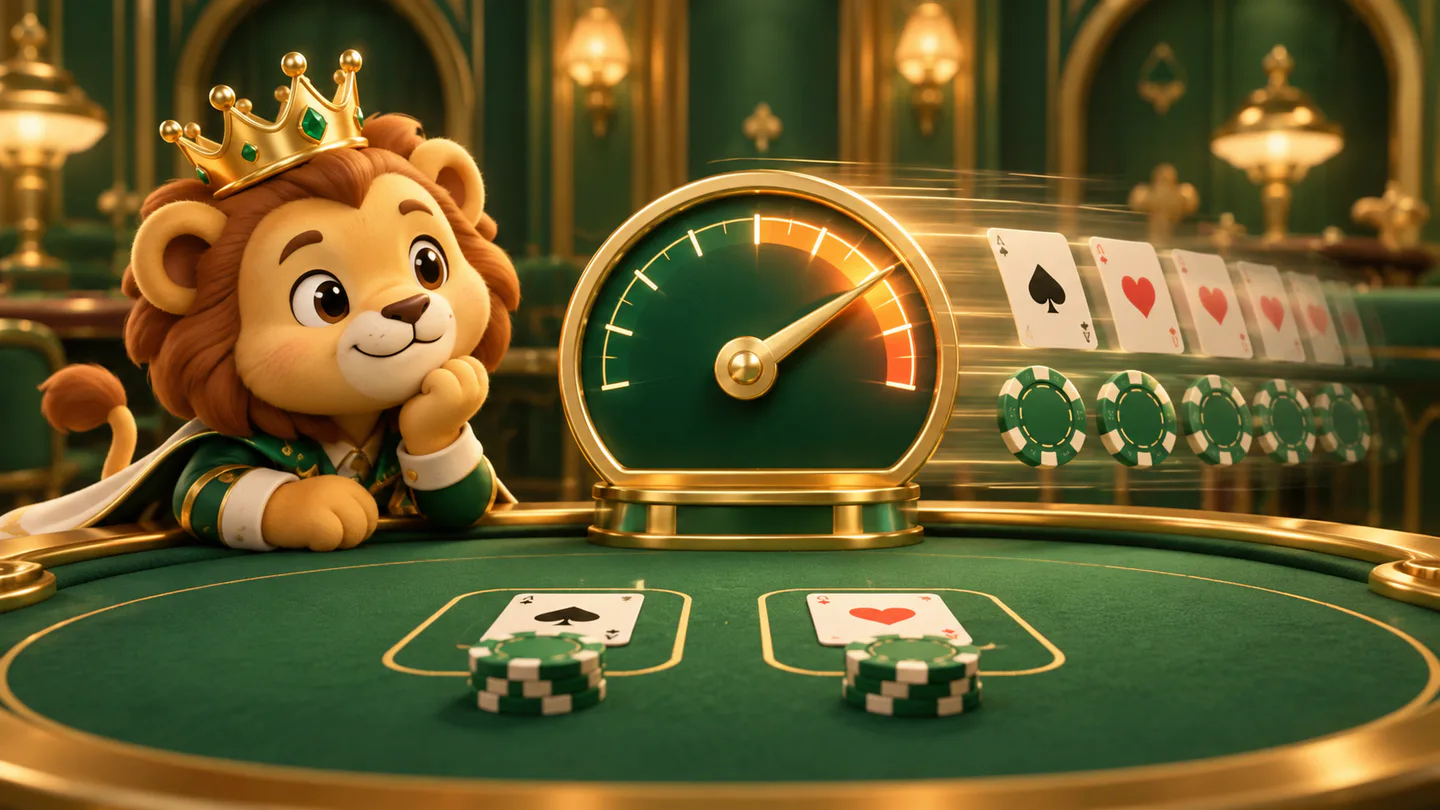
This is the part that matters. A house edge is a percentage per bet. Play sixty bets an hour and it applies sixty times; play six hundred and it applies six hundred times. The expected loss per hour is the edge multiplied by the stakes multiplied by the number of bets — and speed is the only one of those three that players routinely increase without noticing.
A one-percent edge at one bet a minute is a slow drift. The same edge at ten bets a minute is ten times the drift, from the same bankroll, in the same hour. Nothing about the game got worse. You just met it more often.
Why fast feels better
Because wins arrive faster too. The same ten-to-one speed-up delivers ten times as many winning moments per hour, and winning moments are what a session is remembered by. The losses are the same size and just as frequent, but they are quieter. Speed does not change the ratio; it turns up the volume on the half you enjoy.
What this site does about it
Every chip here is a play chip: nothing is bought, nothing cashes out, and a wallet that runs dry tops itself back up. So speed cannot cost you money. It can still cost you the thing it costs everywhere — the sense that you were playing rather than being played through. The coin pusher's auto-play stops on refresh and will not restart itself. The blackjack table waits for you to open your cards. These are deliberate speed bumps, and they are there for the reason above.
The one habit
Decide the length of a session before it starts, in minutes, not in chips. Chips are a moving target — a bankroll that halves in a fast session invites one more fast session to fix it. Minutes are not. When the time is up, the time is up, whatever the count says. It is the same logic as setting a bankroll limit, applied to the one variable that speed actually moves. And if a fast run has you reaching for more of the same to get back where you were, that is the moment to read why chasing losses makes things worse, not to reach.