Ask a strong poker player what beginners most underrate and you will usually get one answer: position.
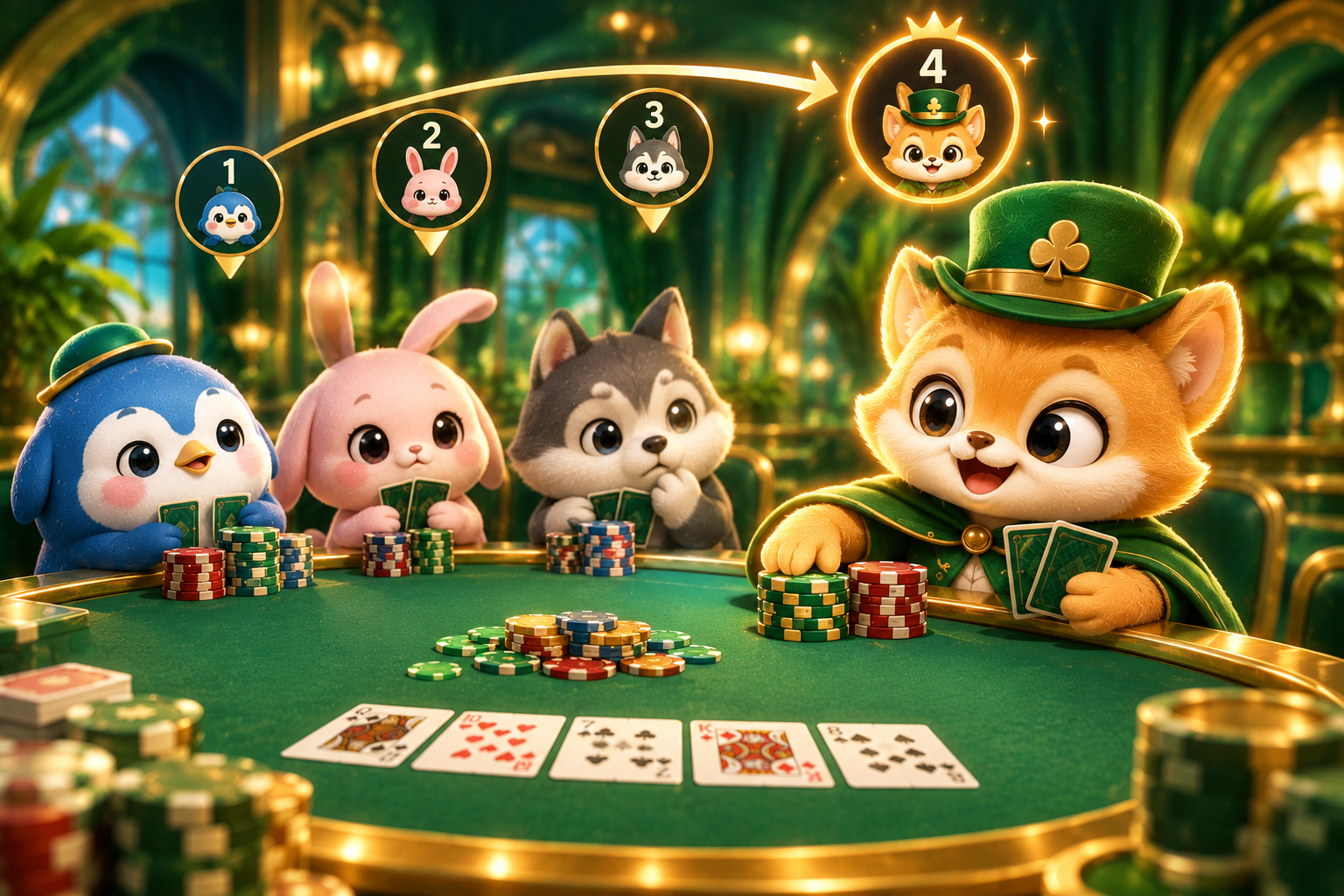
Position simply means where you sit relative to the dealer button, which determines when you act. Late position acts last on every betting round after the flop. That is the whole advantage — and it is enormous.
Information is the entire game
Poker is a game of incomplete information. You cannot see anyone's cards, so you make decisions from what people do.
Act first and you decide with nothing. Act last and you have watched everyone else — who bet, who checked, who hesitated, who raised. Every one of those is a small piece of evidence, and you get all of it for free before committing a chip.
Deal the same hand twice and it plays completely differently depending on which seat you are in. That is not a metaphor; it is why the same cards are profitable in one seat and a loss in another.
What being last actually lets you do
Control the pot size. With a medium hand you would like to see cheap cards. In position, if everyone checks to you, you can check behind and take a free card. Out of position you have to bet or check and then face a bet anyway.
Value bet more accurately. Watching two players check before you tells you a lot about how strong they are. You can size your bet to what they are likely to call, instead of guessing.
Bluff far more cheaply. Weakness is visible from the back seat. When everyone checks, you have seen them decline to claim the pot — and can take it with a small bet. Bluffing from first position means firing blind into players who have shown you nothing.
Fold before it gets expensive. Out of position you frequently bet into a hand that is beating you and then have to pay to find out. In position you see the danger first.
How it changes which hands you play
The practical consequence: play tighter early, wider late.
From the first seats, several players still act behind you, any of whom might raise, and you will be out of position for the rest of the hand. That combination is expensive, so restrict yourself to genuinely strong holdings.
On or near the button, the opposite is true. Hands that are unplayable up front — suited connectors, weaker aces, medium suited cards — become perfectly reasonable, because you will have the informational edge for every remaining round.
Marginal hands are exactly the ones position rescues. Premium hands win from anywhere; the profit from position lives in the middle of your range.
The habit worth building
Before you look at your cards, look at where you are sitting. Most beginners do it the other way round, get attached to a pretty hand, and then discover that they have to act first for the next three streets.
Position is the rare edge in poker that requires no reading of opponents and no maths. It rotates to everyone equally — the difference is who uses their turn.