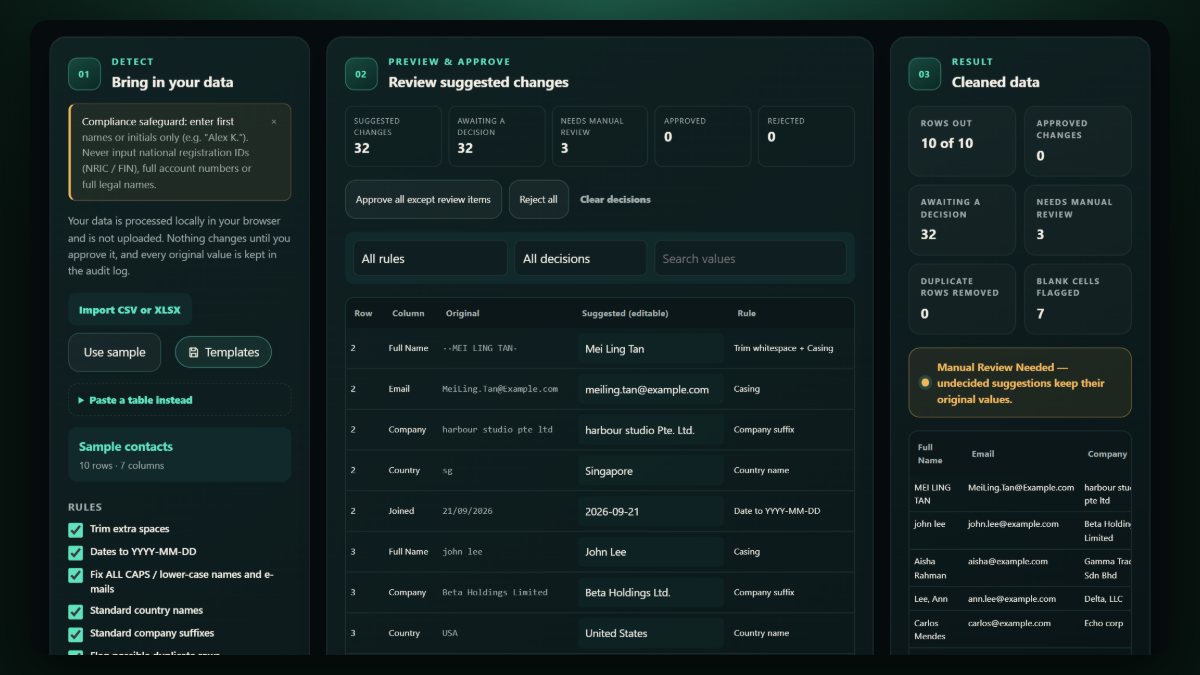
A fact-find gathers everything about a client: income, spending, assets, debts, existing policies, family, plans. That information is essential, but a ten-page questionnaire is not something a client can read back and confirm. A needs analysis summary turns it into one clear page: what the client wants, where the gaps are, which solutions were discussed, and what both sides agreed to do.
It also protects both of you. A written, client-checked record of needs and the reasons for any recommendation is good practice, and advisers in regulated markets such as Singapore are expected to be able to show a reasonable basis for what they recommend.
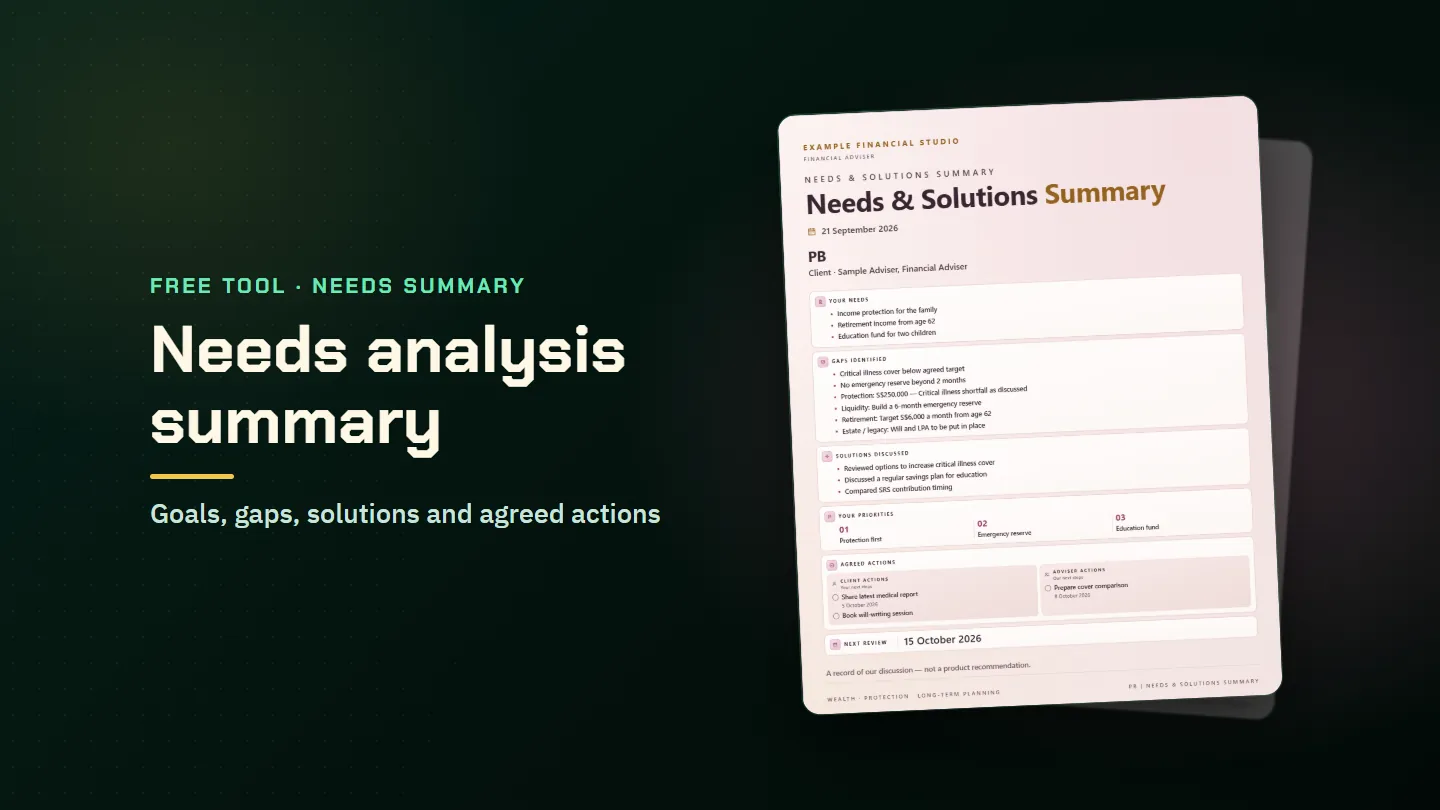
The four parts of a good summary
1. Needs and goals, in the client's words
List the three to five things that matter most to the client, phrased the way they would say them: "Make sure the children's university is paid for", "Stop working at 60", "Clear the mortgage before retirement". Goals written in the client's language are easier for them to confirm and harder to misread later.
2. Gaps
For each need, show where things stand today and the shortfall. Keep it factual and specific:
- "Education fund: S$38,000 saved against an estimated S$120,000 needed by 2034."
- "Income protection: no cover if unable to work; household relies on one income."
Say how each estimate was made, even in a single line. "Based on current fees rising 3% a year" lets the client challenge the assumption instead of the conclusion.
3. Solutions discussed
Record the options you talked about, including the ones the client chose not to take. Noting "Discussed a higher monthly contribution; client prefers to review after the bonus in March" shows the conversation was balanced and saves repeating it at the next meeting.
4. Agreed actions and owners
End with a short list of who does what by when: "Client: send latest CPF statement by 15 Oct", "Adviser: prepare two education funding options before next meeting". Actions with owners and dates are the part clients actually act on.
Writing tips
- Record, don't sell. The summary is a record of the conversation, not a product brochure. Keep product names to the "solutions discussed" section.
- Use numbers sparingly. One figure per gap is usually enough. Detailed projections belong in an appendix.
- Ask the client to check it. Send it within a day and invite corrections. A corrected summary is far more valuable than a perfect-looking one nobody read.
- Keep it private. Avoid unnecessary personal details such as full identity numbers on the summary itself.
A layout you can reuse
The free Needs Summary tool gives you this exact structure: needs, gaps, solutions discussed and agreed actions, as one clean recap image you can send after the meeting. It records rather than recommends, and it runs in your browser, so the client's details are not uploaded. For the review that follows, use a client meeting recap and, for families, a protection review.
Frequently asked questions
What is the difference between a fact-find and a needs analysis?
A fact-find collects information. A needs analysis interprets it: it compares what the client has with what they want and identifies the gaps.
How long should a needs analysis summary be?
One page for the client. Supporting calculations can be kept in your file or attached separately.
Should I include products I recommended?
Include the options discussed and what the client decided. Formal recommendation documents, where required, are separate.